

Greetings LG, thank you for taking part in this interview and even more so for contributing to our cause. Can you tell us a little about yourself?
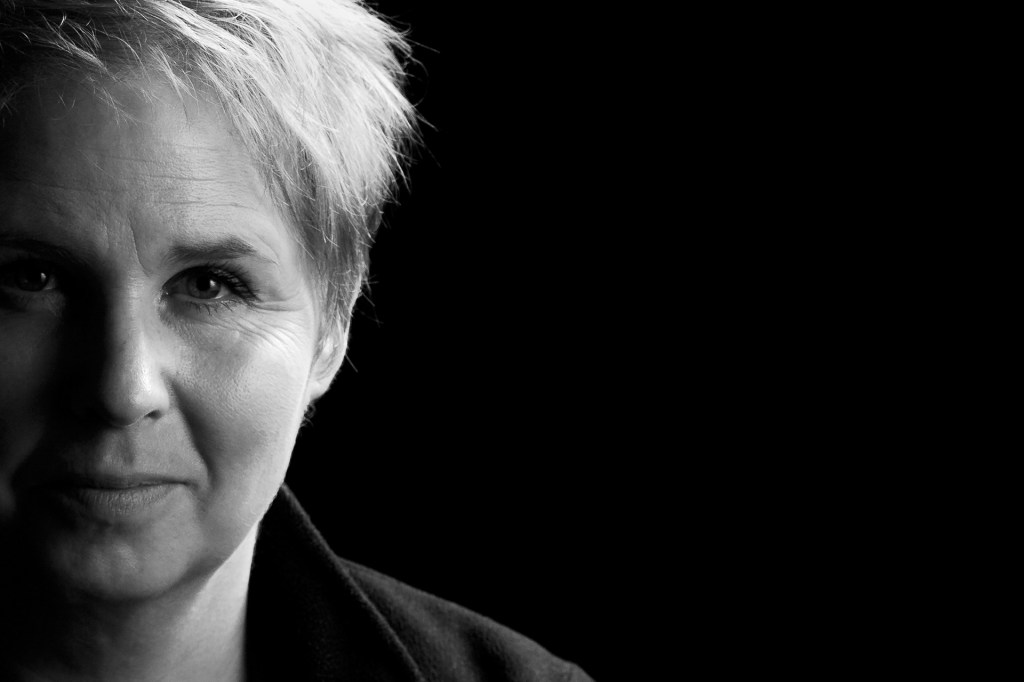
I’m an author and artist living in Ullapool, a small fishing village on the North West coast of Scotland on the same latitude as Lost Cove, Alaska. I was born into a working class family in Glasgow and grew up in a New Town social experiment called Cumbernauld. I left home when I was 17 to go to art school in Dundee and then lived all over Scotland, from city to island, tenement flat to caravan on a croft, before finally settling here. After a long absence, art exploded back into my life a couple of years ago and I’m now in the amazing and joyous position of having a joint exhibition with my daughter, MK Thomson, who is an incredible artist.
Foodbanks have become a part of our life. What started as a means to support those in financial difficulty has now turned into a long-term lifeline for many. Do you think that we will ever be free of them, or do you believe they will be here to stay?
In 1920, Clement Atlee, who would become Leader of the Labour Party and Prime Minister of the UK, wrote, Charity is a cold grey loveless thing. If a rich man wants to help the poor, he should pay his taxes gladly, not dole out money at a whim. Ninety-seven years later, Jacob Rees Mogg, a senior Conservative politician, described foodbanks as rather uplifting. That foodbanks are a long-term lifeline for anyone in this country is not uplifting, it’s an abomination.
In 2004, the Trussel Trust had two foodbanks in the UK. By 2024, they ran well over one thousand, a response to an exponential rise in food poverty caused by years of Tory rule at Westminster. While emergency situations do arise, in a country as wealthy as ours no-one should be relying on foodbanks as a regular source of nourishment. No matter how many simpering Royals turn up at one for a photo opportunity, it’s a mistake to accept foodbanks (and Conservative governments) as a normal way of life. Someone being forced to use them to feed their family is not living, they are trying to survive.
There are enough resources in this country, and indeed the world, for everyone – the problem is the unequal share of wealth. It’s no coincidence that the gap between rich and poor has expanded as rapidly in recent years as the requirement for foodbanks but this is a situation that was created and, if there is the will, it can be uncreated. The problem is that we are so far gone now that a radical redistribution of wealth is required, but unless we have a revolution, or at least a government with integrity, I don’t see that happening any time soon.
Do you think it is down to the volunteers and fellow man to keep food banks going or should the government be doing more to intervene?
What the government should do is create a fairer and more equal society in which the requirement for foodbanks is not normalised. That’s the fantasy. The reality is that without volunteers and donations to foodbanks, this government would very likely let those most in need starve to death. It should be a source of shame for them that many people using foodbanks these days are in work and still unable to afford to feed their families, but where there are no principles or human decency, there can be no shame.
Although I fundamentally disagree with the idea of people having to rely on charity for the basic necessities of life, the work done by foodbank volunteers is outstanding. Imagine what they could achieve with all that energy and commitment if they didn’t have to sort out the government’s mess.
Talking of mess, if the government did get involved with foodbanks, they would undoubtedly fuck them up while simultaneously managing to line their own pockets.
Here at Urban Pigs Press we believe that the indie writing scene is an incredible place of support. From fellow writers to zines and indie presses. Who is your favourite writer in the indie community and why?
I’ve read a lot of work by indie authors but not a lot of work by any one individual, so rather than pick a favourite writer, I’ll mention a few books from indie presses I’ve loved. There are many more.
When I first began reading The Recalcitrant Stuff of Life by Sean McCallum, it was as much to find out about what Outcast Press were up to as it was about reading the book. It turned out to be a great book about relationships, especially the bond between friends. On reading it, I realised that I was in excellent company and was chuffed to bits to become part of the Outcast scene. Jack Moody’s Crooked Smile, also published by Outcast Press, was another cracking read – dark, funny, painful.
Fish Town (Guts Publishing), John Gerard Fagan’s memoir about leaving Scotland to live in Japan is one of the best books I’ve read in recent years. When I read it, I was in a state of terror about my own memoir coming out, I had the fear about how exposed I’d be, how vulnerable I was making myself, and I was also worried about potential backlash. My return to art helped me to work my way through these emotions and then, after reading Fish Town, I reached out to John and asked him how the experience had been for him and he couldn’t have been more reassuring. As you state in your question, the indie writing scene is an incredible place of support. Sebastian Vice and Paige Johnson at Outcast Press have been brilliant to work with, as has the multi-talented Cody Sexton of Anxiety Press. Cody designed the cover for my memoir, Modernist Dreams Brutalist Nightmares. I sent him a lot of notes during the process and he was so incredibly patient and kind. All he wanted was to make sure I got a cover I loved. He achieved his aim.
One final book I want to mention is the Gone crime anthology, edited by Stephen J Golds and published by Red Dog Press (sadly now a former indie publisher). Gone is a belter of an anthology, brimming with the most brilliant and enjoyable writing.
Tell us about your latest work? Do you have any books you would like our readers to know about?
Modernist Dreams Brutalist Nightmares (Outcast Press)is a memoir about being part of the first generation to grow up in Scotland’s most ambitious and experimental New Town. Mainly set in the 1970s, with my story set against the social landscape of the time, it also tells the story of my great-grandparents, immigrants from Lithuania who got married in the Gorbals in Glasgow in 1900. It’s about identity and change. It’s funny, honest, and brutal in parts, and I’m told that it’s very relatable, no matter where or in what decade you grew up. Read it now before the sequel, set in the 1980s, comes out later this year. You can find out about my other books and my art on my website LGThomson.com
How did you first hear about Urban Pigs Press?
On Twitter. It might have been the call-out for the Hunger anthology, or maybe just before that. Very pleased to make your acquaintance.
As are we to make yours. So pleased you answered our call. You’ve smashed these questions right out of the park. I have to admit that I knew the one about government intervention was going to be a trigger for quite a few. The responses really show that those who created this mess can’t be trusted to get us out. I was speaking to the founder of FIND yesterday and she told me they sent out their first food parcel in 1990. For me there’s something in that. I personally believe that we’re still unable to recover from the damage THAT tory leader set in place.
Thanks again for doing this and for letting us publish ‘Four’. A style of writing that drew me in from the off. I’m looking forward to discovering more of your work in the near future.
‘Four’ is a survival horror story set in a small open boat at sea. Read it now in The Hunger anthology.
LG Thomson lives in Ullapool, a small fishing village in the north west Highlands lying on the same latitude as Lost Cove, Alaska. Her writing has appeared in a wide range of anthologies and literary publications including Wyldblood Magazine, Epoch Press, and Art North. She is the author of seven novels, including noir thriller Boyle’s Law. Her first non-fiction book was published by Outcast Press in 2022. Modernist Dreams Brutalist Nightmares, is a searingly honest and brutally funny memoir about being part of the first generation to grow up in Scotland’s most ambitious and experimental New Town. The sequel, set in the 1980s, will be published in 2024.
Lorraine Thomson (@LGThomson1) / X (twitter.com)
LG Thomson (@l.g.thomson) • Instagram photos and videos
Buy The Hunger Anthology now and help support families in need.
Urban Pigs Press presents a collection of 23 stories by 23 different authors inspired by the prompt HUNGER. From gritty crime, realism, horror and everything in between. All profits will go directly to FIND – Families in Need to help tackle the global issue of hunger.
A collection of stories that are as close to the bone in literary class as they are in their scathing analysis of a broken society.
-Stephen J. Golds
Author of Say Goodbye When I’m Gone
Part social commentary, part linguistic showcase, the authors of Hunger share such thought-provoking stories of a feeling that no-one is alienated from.
Some will leave you angry, some will leave you grateful and some will leave you with questions.
I would say it was a joy to read but more accurately, I am a more rounded-person for reading it.
You’re about to go on a journey. Where to? You will know when you get there.
– Rob Jelly
Featuring the talents of Sophia Adamowicz, LG Thomson, Jacko Pook, Mathew Gostelow, Paige Johnson, Matthew McGuirk, Virginia Betts, Marek Z. Turner, David Cook, Neda Aria, Eddie Generous, Ann Hayton, Russell Thayer, James Jenkins, Bam Barrow, Sebastian Vice, Cassie Premo Steele, A.J. Stanton, Mark Burrow, Tabitha Bast, Rob Walton, Tom Leins and Jude Potts. Front cover by Jo Andrews (Mojo Art) and inlay by Cody Sexton (Anxiety Press). Foreword by Andrew Marsh of Dial Lane Books.
For more information or to further support our chosen charity, please visit the link below.
 Urban Pigs Press
Leave a comment