
Owen Price had ginger hair, a galaxy of freckles, cheap glasses, and was flummoxed by maths. He did at least have a flair for telling stories. Usually real whoppers. He made one up in my class about his younger brother having an oblong head after falling into a toolbox as a baby.
His classmates believed him. For a second, so did I.
They were fourteen and fifteen-year-olds. Desperate to jettison childhood. The girls matured faster than the boys, but that wasn’t saying much. They fizzed with atomic levels of energy. Hormones exploding. Every emotion amplified – extroverts and introverts alike.
On the day of the incident, I was marking essays. Grateful for the quiet that descended on the school at around five in the afternoon. It was the calm after the storm, or so I thought. The essays could have waited but I did not fancy returning to the four walls of my pokey, rented flat. Part of me was considering whether to phone my ex-wife to see if she’d answer, or write her a letter-length email (this was back in the days when people actually wrote to each other).
It was Mrs Edwards, the Headmistress, who disturbed my peace. The classroom door flew open. “Come with me,” she cried, scooping at the air. “Hurry.”
I followed, trying to understand what she was telling me. It was a mish-mash of information, like switching between channels. The police were coming… Kennington Road… Chasing buses… Warned them in Assembly about the dangers the other week…. Tunde Cumberbatch under a taxi… Trapped… Very serious… Fire Brigade cutting him out… Owen Price did it.
We rushed down the stairwell.
“Owen?”
“Yes.”
Mrs Edwards tutted at scribbles on a wall. Something about an art teacher, Ms Griffin, smelling of fish. “That’s disgusting,” she snapped, striding down the steps to the ground floor. She led me along a corridor. I had a sense that I was in trouble. Rekindling emotions from when I received a suspension in my own school days.
We stopped outside an office. The sign on the door said, Mr Turner, Deputy Headmaster. He was off sick, apparently due to stress.
“Can you sit with Owen?” Mrs Edwards asked.
It was an instruction presented as a question. Pretty typical of how she communicated. I looked at the chintzy pattern of her baggy cotton dress. A silver chain round her neck with a crucifix. I could never fully decide if I had a problem with her Christianity. She wasn’t overtly pious or sanctimonious, but she did insist on the pupils singing Christian hymns in Assembly. Sixty percent of the kids in the school were Muslim, Hindu or Sikh. I suspected that Mrs Edwards was making a point. A number of parents formed a coalition to lodge a complaint, which in turn was challenged by a small group of parents who fiercely wanted traditional hymns. The dispute was reported in the local newspaper.
Mrs Edwards entered the office. “You can leave now,” she said without thanks to an African woman wearing a blue apron, who I realised was a cleaner. The woman departed in silence.
Every now and then you see an expression of grief that takes your breath away. That was Owen when I walked into the room. He was sitting on a plastic chair, which he must have moved so he could stare out the window at the clouds. He turned, and when he recognised me his pale skin shaded traffic-light red, ready to cry.
“Owen,” Mrs Edwards said, “Mr Cole is here to stay with you. We called your mother. She’ll be here shortly.”
He nodded. Shoulders hunched. Hands slinking between his bony knees.
“The police want to speak with you and you must tell them the truth. No stories – do you understand?”
He gazed at his scuffed shoes. The sole on his left foot was coming loose.
“Owen, I am speaking to you.”
The way she addressed him was not helpful. I said, “Mrs Edwards, I’ll be with Owen. I’m sure he’ll explain things.”
She hitched her dress at the waist, straightening it. “Fine,” she huffed.
I closed the door behind her.
Owen returned to facing the window. He gazed at the pink-tinted clouds as evening fell. The clocks would go back by an hour soon and it would be dark on the way to work and dark going home. It always struck me as strange how we altered time.
I stood by a bookcase next to the window, side-on with him.
“I didn’t mean it.”
Sirens could be heard from emergency vehicles. The thick lenses of Owen’s glasses magnified the upset in his eyes.
“Do you want to tell me?” I asked, grabbing a box of tissues from Mr Turner’s desk and removing a couple.
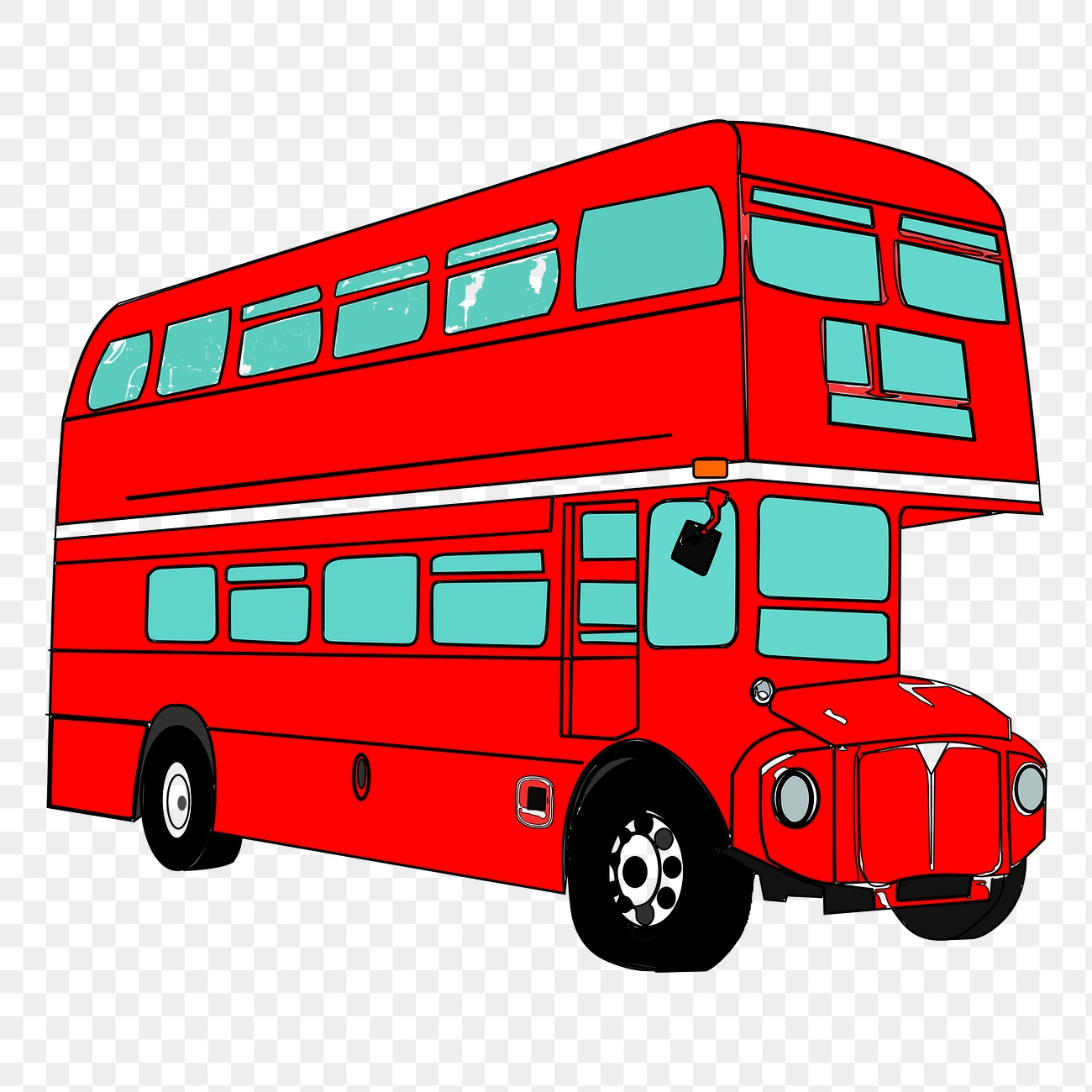
He wiped teardrops as he told me about the game he played with the other kids after school. The idea was to be the first onto a bus. These were the old Routemaster buses with conductors and a platform at the rear that you could hop on and off. The kids grouped together about ten to fifteen metres from the bus stop. They raced one another to jump onto the platform of a coming bus before it reached the stop so they didn’t have to queue. Swarming into the road, they swung their big bags at each other and threw punches. Fights broke out. Vehicles swerved. Some bus drivers and conductors refused to stop there.
Residents complained. As had London Transport.
Mrs Edwards spoke in Assembly with an officer from the Metropolitan Police about the game, which was called ‘Bundles’. The policeman, assumed to be racist, was booed when he started speaking.
Owen said, “Tunde’s faster than me.”
“What did you do?”
“I never meant it.”
He had swung his Hi-Tec sports bag and struck Tunde, who lost his balance and staggered farther into the road in an attempt to stay upright. A taxi ploughed into him. Eighteen hundred kilograms of metal rolled over his body. A limb snared and snapped in a wheel arch. Then a bus smashed into the taxi.
There was a knock on the door. Two uniformed coppers, a man and a woman, came in.
A bruise flowered on Owen’s cheek. Tunde’s friends had punched and kicked him to the ground.
I pulled out a lot of tissues over the next hour.
Owen told the truth, his playfulness gone. I assured him everything would be all right but that was a lie. He was never coming back to the school.
Neither was Tunde. He spent two months in a coma. Somehow, he survived, albeit with permanent brain damage.
I recall watching the lamplights come on in the street. Seeing the intricate graffiti on the wall of an adventure playground. The artistry of 3D lettering.
When the police questioning was over, I went up the stairs to my classroom, passing another cleaner in the corridor who was mopping the floor. The woman, in a thick West Indian accent, said, “Hello, Sir,” as I left footprints in the wetness. Her deferential tone made me uneasy.
I put away the papers and grabbed my jacket and rucksack, checking the desk for personal items I might want to keep. The reality of teaching was nothing like I imagined when I began my training. I felt embarrassed and naïve to think I could make a difference.
I opted to walk home, disgusted by the thought of a bus. I mulled over my wife’s return to Scotland; the grubby flat where I lived; the job. What I was doing or – more accurately – not doing with my life. The usual helter-skelter of despair. I stopped off for a pint in The Griffin on Brixton Road. Someone told me it used to be an IRA pub.
There was a folk band on. I found a table and listened to the music. One pint became two and so on. I spoke to no one, except the barmaid when ordering. I bought Marlboro Lights from the cigarette machine and smoked, watching the musicians on stage and liking the sound of a fiddle.
I was lost. I can still remember the feeling. Peppered with the sadness of thinking about the pupils I taught. Running in the road. Playing with the traffic. Laughing. Swinging bags. Kids raced. That’s what they did. Energy to burn. Why walk when you can sprint? Go! Go! Go! Lungs aflame.
Mr Cole, can you sit with Owen?
Why pretend it’s a request? No one said what they meant in education… Marriage… Everywhere. That was the problem. The white coppers kept asking Owen, What did Tunde do? Did he have a knife? I mean, what was that about? Tunde? A knife? Come on. Like, where were they going with that? Tunde was a diligent pupil. One of the smartest. No, no, no, Owen repeated, telling them straight. You can trust us. Both Owen and I knew what they were hinting at.
I was trapped by it all. Mrs Edwards pretended to believe in an education system that gave 90 percent of these kids no chance of success when they left. And what was success? Become Middle Class. A teacher. Ha-ha. Good one. The kids saw how miserable teachers were.
That’s what I thought about, sitting on my tod in the pub. Smoking fags. Watching a girl play a fiddle like her existence depended on it, smiling merrily at a man with a long, frazzled beard on the accordion.
I quit teaching for good that day.
It was partly due to what happened with Owen and Tunde, but it wasn’t only to do with them. I was one of the few teachers who knew about Turner sleeping with a pupil. His dirty secret eventually came out and the Old Bill arrested him. They found stacks of underage porn on his PC.
Someone – I won’t say who – sent a letter to the local paper, explaining what Mrs Edwards tried to cover up…
In the pub, I knew I was done and dusted with education. I drank fast, snorted lines in the toilet from some leftover coke, and found myself wandering onto the stage with the folk band.
Don’t ask why. I fancied a boogie, I guess. I danced my little-leftie-Middle-Class-do-gooding-heart-out. Swinging my rucksack around my head like a cowboy’s lasso. The fiddler sped up. I yanked off my jacket and kicked off my shoes. Ripped open my shirt. Pogoing to the music. Gut jiggling. Come on, bundles. Bring on the babies with oblong heads. Witness the race riots. Burn cars. Smash-up shops. Armies of working-class kids desperate to battle against their no futures. Showing some fight. Some fury. And I was dancing as if it was the last night on earth. Half-formed thoughts and feelings swishing inside me. The shame of my own school days. Sent to the Headmaster’s office for bashing a girl’s face into the water fountain as she drank from the tap, cracking a tooth. Miranda Clarke—Sorry. There was no reason. No reason whatsoever. I couldn’t explain it to the Headmaster, or my Mum. I recall the disgust on Dad’s face.
I saw Miranda and had an urge.
Didn’t mean it.
Like rushing onto the stage. Throwing arms. Kicking legs. Busting shapes.
Absolute scenes.
An ex-husband and ex-teacher with belly-button fluff going for it on seven pints of premium strength lager and a double whisky, wishing he had the power to not just change time, but reverse it.
Mark Burrow has published a novella, Coo, which is about a young and angry alcoholic who transforms into a pigeon (Alien Buddha Press). His short stories have appeared in a range of titles, including AEOS Magazine, Spinners, Frazzled Lit and Underbelly Press. He’s been nominated for a Pushcart Prize and Best of the Net (prose & poetry). His latest novel is to be published by Urban Pigs later this year.
He lives in the South of England and can be found on social @markburrow.bsky.social & on Insta @markburrow24.
 Urban Pigs Press
Leave a comment